In the Founder’s Seat: DEMCON unmanned systems
An interview with Fedor Ester
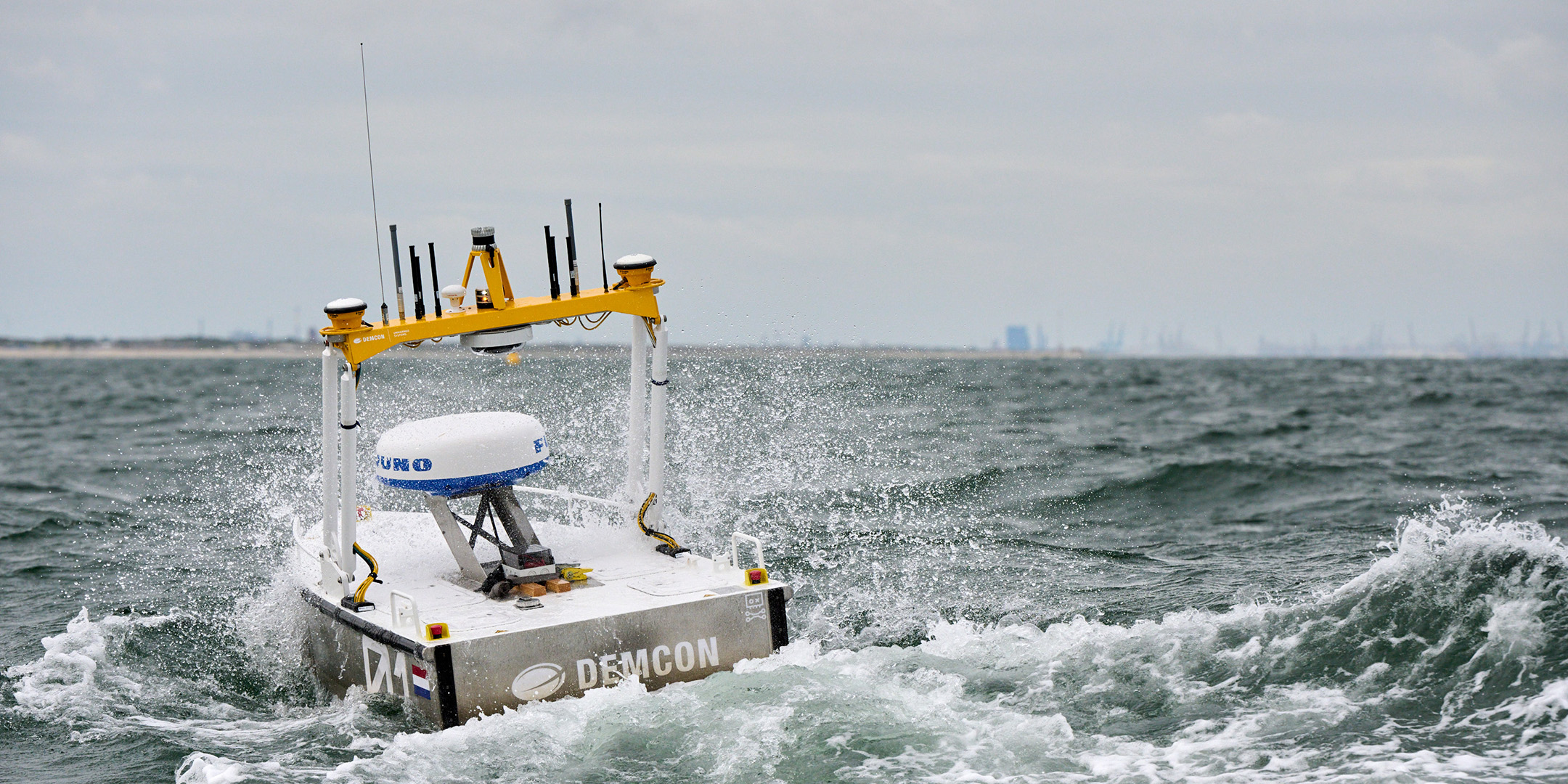
DEMCON Unmanned Systems develops autonomous, unmanned vessels for inspection, measurement and monitoring at sea. Based in the port of Scheveningen, where the company has been established since 2024, it is working on vessels capable of operating autonomously on inland waterways and at sea. For example, they navigate around offshore wind farms and carry out measurements around offshore infrastructure.
The company was founded by Fedor Ester, Barth Vrijling and Yannic van Moerkerk and is part of the DEMCON Group. We speak to Fedor, director and co-founder, about autonomous shipping, innovation and the company’s development.
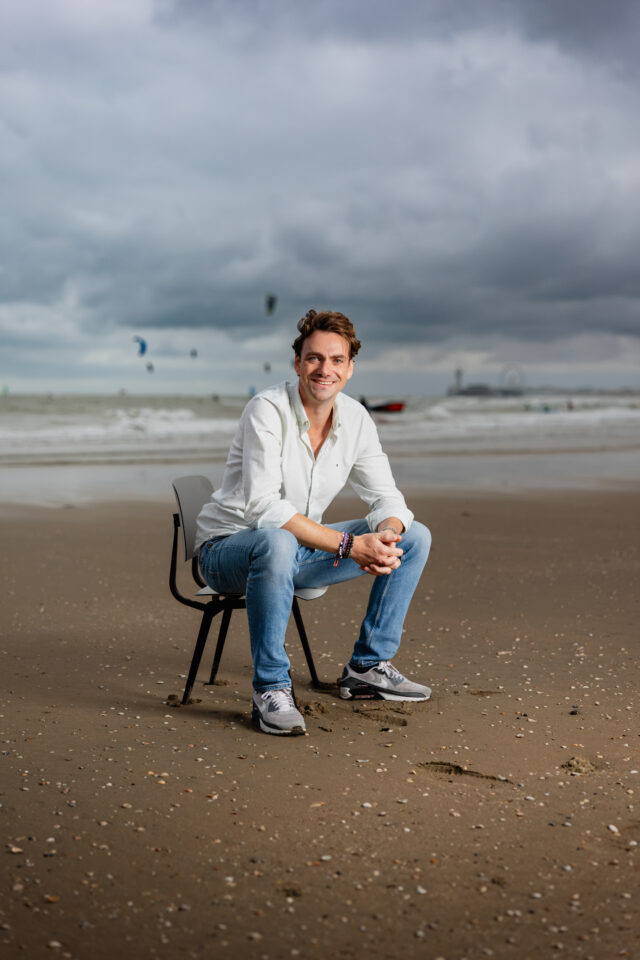
Today in the Founder’s Seat:
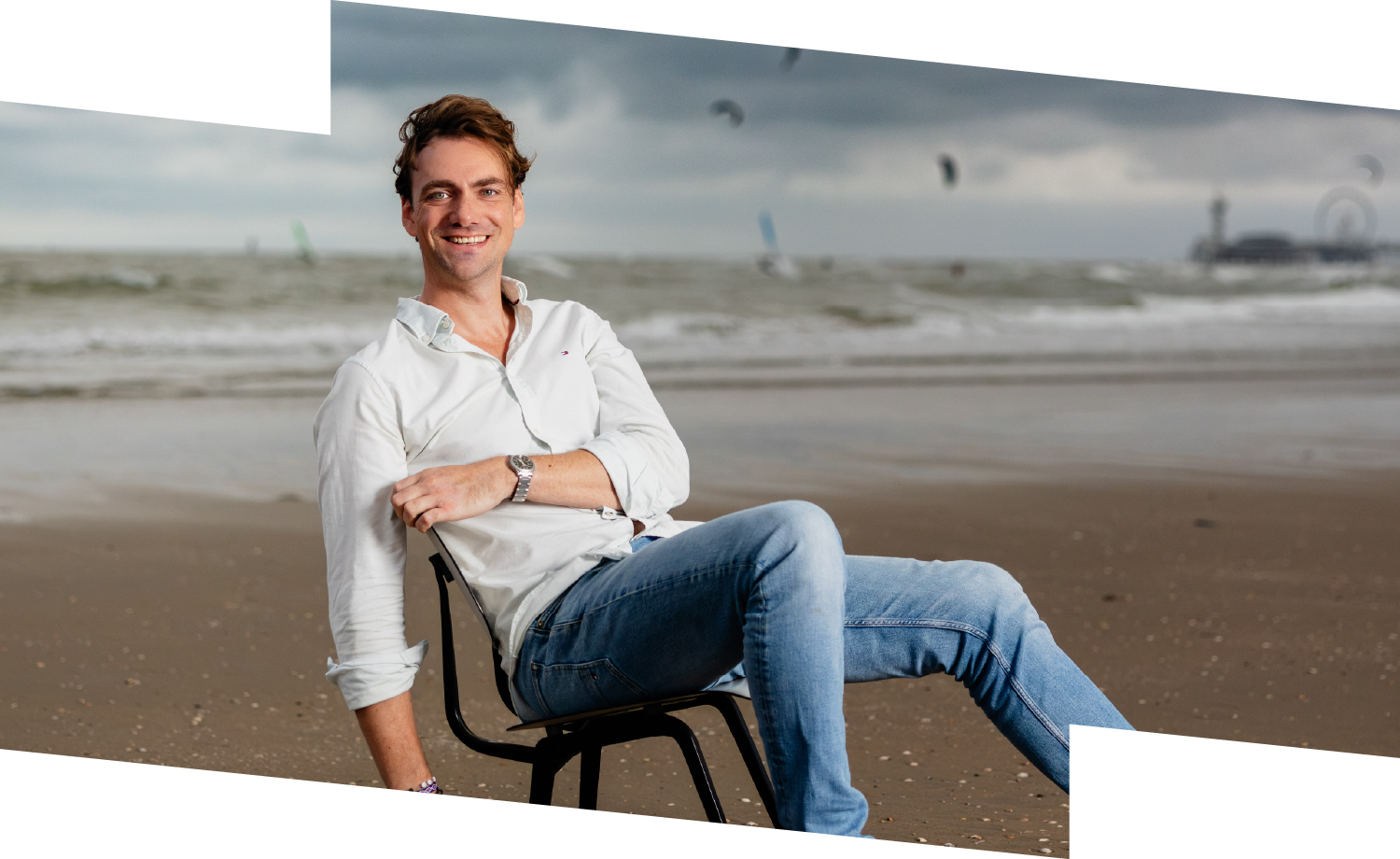
Fedor Ester, founder of DEMCON unmanned systems
Sailing drones – tell us more. What exactly are they?
“We build unmanned vessels ranging from 1 to 24 metres in length. Most are 3 or 7 metres long and are primarily used for hydrographic surveys, such as mapping the seabed. We supply the vessel platform and ensure it is operational. The customer decides how it should be used and determines which sensors and measuring equipment are to be fitted.
We also develop the peripheral equipment for our vessels. In the maritime sector, much of the equipment is often large and heavy. That doesn’t work on a small unmanned vessel. Sometimes this means we have to develop something ourselves, such as a small winch for depth measurements.”
What is your mission?
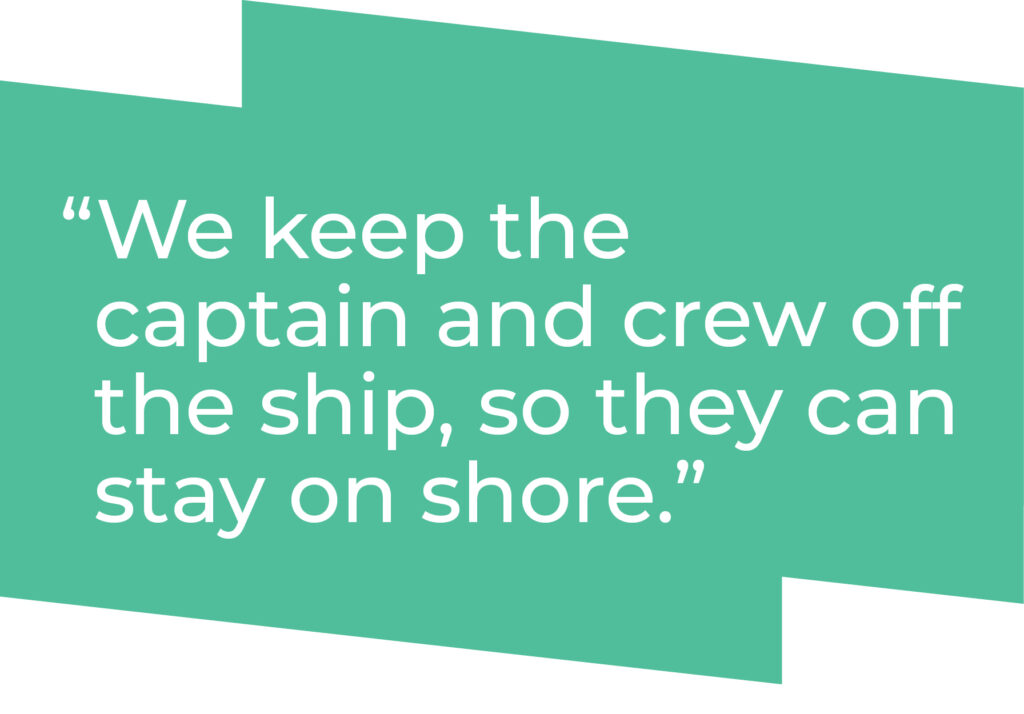
“Making work on the water safer and more environmentally friendly. With the robotic solutions we provide, we can ensure that the captain and crew can remain on shore. This enables us to carry out inspection tasks more safely, using far less equipment and in a more environmentally friendly way.”
Could you explain exactly what it is about your solutions that makes them environmentally friendly?
“As people do not need to be physically present on board, there is no need for all the facilities required for the crew, so you can build smaller boats and use fewer materials. Because the boat is smaller and lighter, it is then easier to power it electrically or with a hybrid system.”
Why is the port of Scheveningen, in particular, so suitable for you?
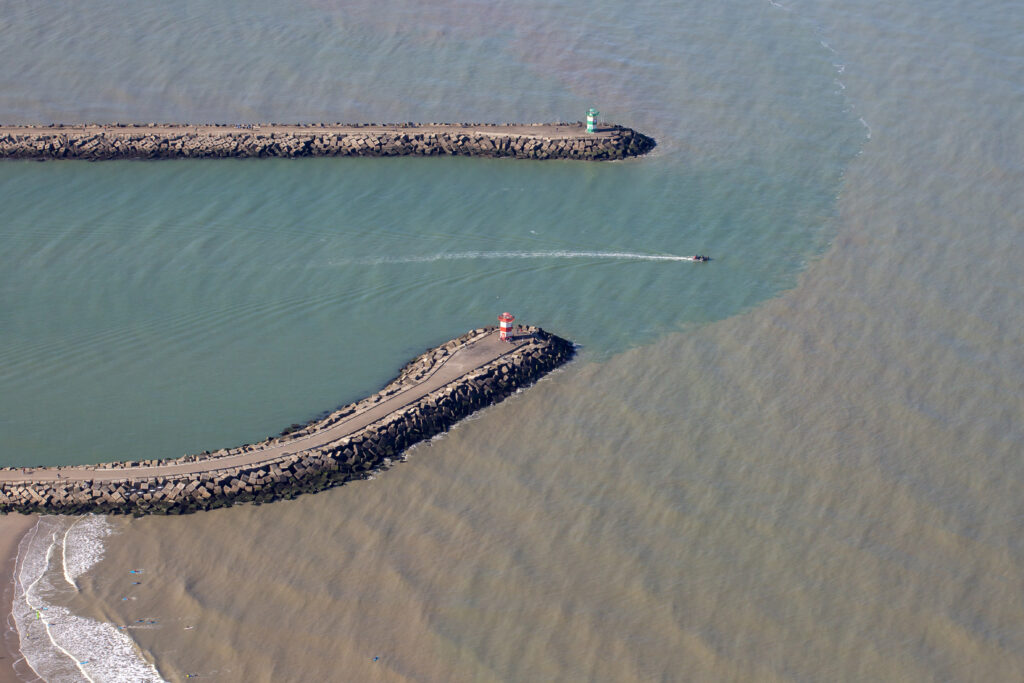
“The main reason is that we have direct access to the sea here. It takes just one minute to sail out to sea. We have a really lovely test area off the coast here, within the harbour master’s jurisdiction. He has the authority to facilitate this sort of thing. And he has been given a mandate by The Hague City Council and Campus@Sea to facilitate and test more experiments, which makes it easier for us to operate.
In other ports, you always have to take escort boats with you, or you have to sail for a very long time until you reach the open sea and give way to a lot of other maritime traffic. That’s more challenging from an operational point of view. Here in Scheveningen, there’s a great deal of freedom to carry out sea trials, which was a key reason for us to set up the company here.”
Do you notice that The Hague is actively developing this area?
“Yes, that’s also reflected in the Port Vision. It deliberately identifies technology and innovation as the clear focus for the third port. All of this still needs to take shape, but it ties in with why we came here.”
You started with flying drones, but when that market began saturating, you shifted your focus to sailing drones. Do you expect many tasks to shift from flying to sailing drones?
“We did indeed start with another company, specialising in flying drones. But that market soon became saturated. By chance, we discovered that the marine sector was still in its infancy and lagging in terms of technology when it came to unmanned boats. That’s when we made the switch and started building unmanned boats. We gained the trust of our first major client to actually put this into practice.
I do expect that some tasks will shift from flying drones to sailing drones, but it is still a niche market. The regulations are not yet fully adapted to this, which means you cannot simply deploy these solutions. The market is developing rapidly and, at the same time, there are plenty of opportunities to experiment. New licensing frameworks were implemented in the Netherlands last year, which has increased their usability.”
What is stopping you from potentially growing, which rules are holding you back?
“It’s not just one thing. Our technology is new on all fronts: a captain who’s ashore, a new workflow, new technology. And how does it work, for example, concerning liability? There’s no captain on board of the ship, so what about the insurance? There are so many pieces of the jigsaw that need sorting out; that’s where you can see that the market isn’t keeping pace quite yet. So we’re really at the forefront of the market. Our role is to keep pace with these developments and adapt our solutions accordingly.”
And how long will it take before this market becomes saturated?
“I think that will take a while yet. We can see that the defence sector is experiencing tremendous growth on a global scale. More and more drone boats are being deployed, and that is driving the market as a whole. So I expect it to remain a growth market for the next 10 years, and then some.”
You made the transition to unmanned vessels in good time. How do you decide when to stick to a course and when to make adjustments?
“It’s difficult to plan that precisely. You have to keep a close eye on where the market is heading and, at the same time, accept that you sometimes have to take a risk before everything is certain. Large companies are often risk-averse, because they want certainty about their raison d’être. As a smaller company, you have to dare to make choices sooner. Luck helps, of course, but above all, so do hard work and recognising in good time where opportunities arise.”
The interview continues below the image.
What do you think is something that people still say, ‘That’s impossible’, but which will be perfectly normal in five years?
“I think people are surprised at just how much can already be done automatically. Of course, it’s still technology, so there’s always a risk of failure. If something does go wrong, there’s an immediate and very strong backlash. Mistakes aren’t really tolerated, and that also limits the uptake of something new.”
How high are the risks if something goes wrong?
“That depends on the type of vessel. The larger the boat, the greater the risk of, for example, collisions, leaks, accidents involving people, and so on. These are, of course, the worst-case scenarios. In our sector of small and unmanned vessels, ranging from 1 to 24 metres, the risk is much more limited. However, a whole new sector is also emerging in the field of highly automated navigation, involving larger vessels and greater distances. The risks are greater there, so I don’t expect developments in that sector to progress very quickly.”
Are you embraced by the maritime market, or are you the odd one out?
“The maritime market is quite conservative and traditional. But at the same time, they recognise the opportunities and are facing challenges, so interest in unmanned shipping is growing. It’s slowly gaining momentum. And it has to – they also need to become more sustainable, there’s a labour shortage, and safety regulations are becoming stricter. This development isn’t straightforward; a great deal of coordination is still needed between technology, regulations and practical operations. Discussions need to take place on how we can add value and how the new technology can be integrated into existing workflows.
Because ‘unmanned’ doesn’t mean that no humans are involved at all. There’s still someone on shore controlling the vessel.”
The interview continues below the image.
So how do you build trust in such a traditional sector?
“Lots of meetings, having discussions, explaining things, explaining them again, demonstrating, sharing test cases. We have the advantage of being able to work with major organisations such as Van Oord and Rijkswaterstaat. Having clients like that in your portfolio inspires confidence. And quality is our top priority, but that can sometimes be difficult to get across. Because in a new market, there are always plenty of cowboys offering cheaper, lower-quality solutions. We try to position ourselves at the other end of the spectrum; we aren’t cheap, but we do deliver high quality. And fortunately, we’re able to convey that effectively through our client portfolio.”
Is there a case study or example that really illustrates the approach in The Hague?
“Now that we’re based in The Hague, we’ve come into contact with Rederij Groen, and we’re now working together to see how we can deploy unmanned vessels within the shipping company – how they can innovate using unmanned vessels. They have a large fleet of traditional vessels used for, amongst other things, seismic surveys and cable protection. They are now investigating how they can make these operations more sustainable and whether unmanned vessels could be a solution. That’s exactly the sort of exciting thing about The Hague’s network and something made possible by the ecosystem here. And you can see that the ecosystem is growing.”
Will we be able to see you sailing here in Scheveningen?
“Almost every day! We carry out regular tests in the third harbour.”
As an impact entrepreneur: how do you strike a balance between doing good and doing business?
“In our case, that’s relatively straightforward, because the sector needs to become more sustainable. Our customers are driven by that same ambition. The maritime sector is undergoing a transition, so that helps enormously.”
Want to know more?