In the Founder’s Seat: Iona Mulder
An interview with The Good Spice
The Good Spice aims to make the spice trade both tastier and fairer. The company works directly with small-scale farmers all over the world and sources Single Origin Spices for the Netherlands via short supply chains. This ensures farmers receive a fair price and that the spices remain fresher and more flavourful than if they had spent years travelling through various intermediaries.
For The Good Spice, better cooking starts with knowing where your ingredients come from. With distinctive flavours and unique origins, they want to encourage people to cook with more curiosity, experiment more and make more conscious choices. We speak to founder Iona Mulder about transforming a traditional supply chain, entrepreneurship with impact and how fair trade can ultimately just taste much better.
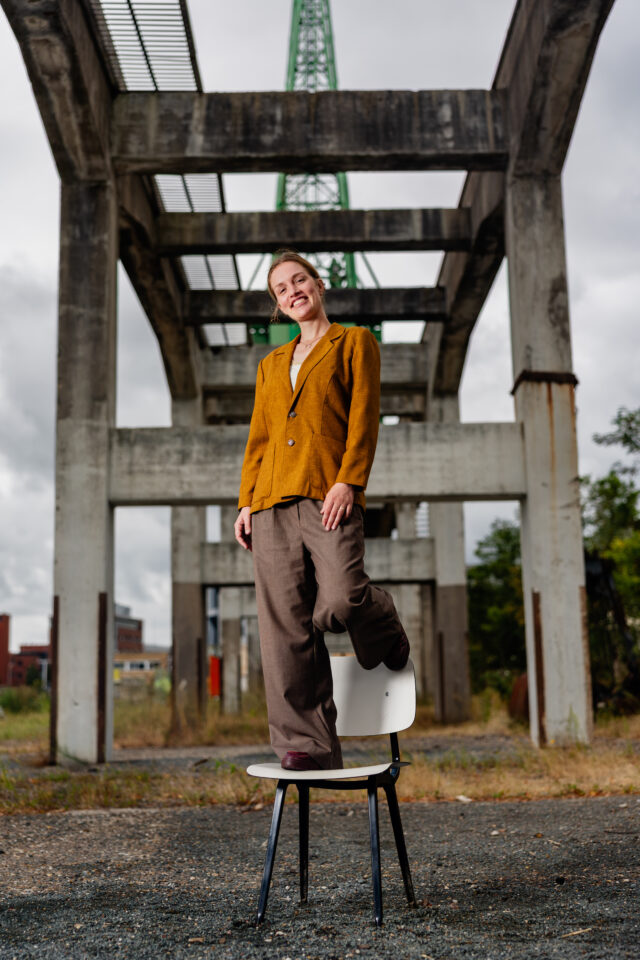
Today in the Founder’s Seat:
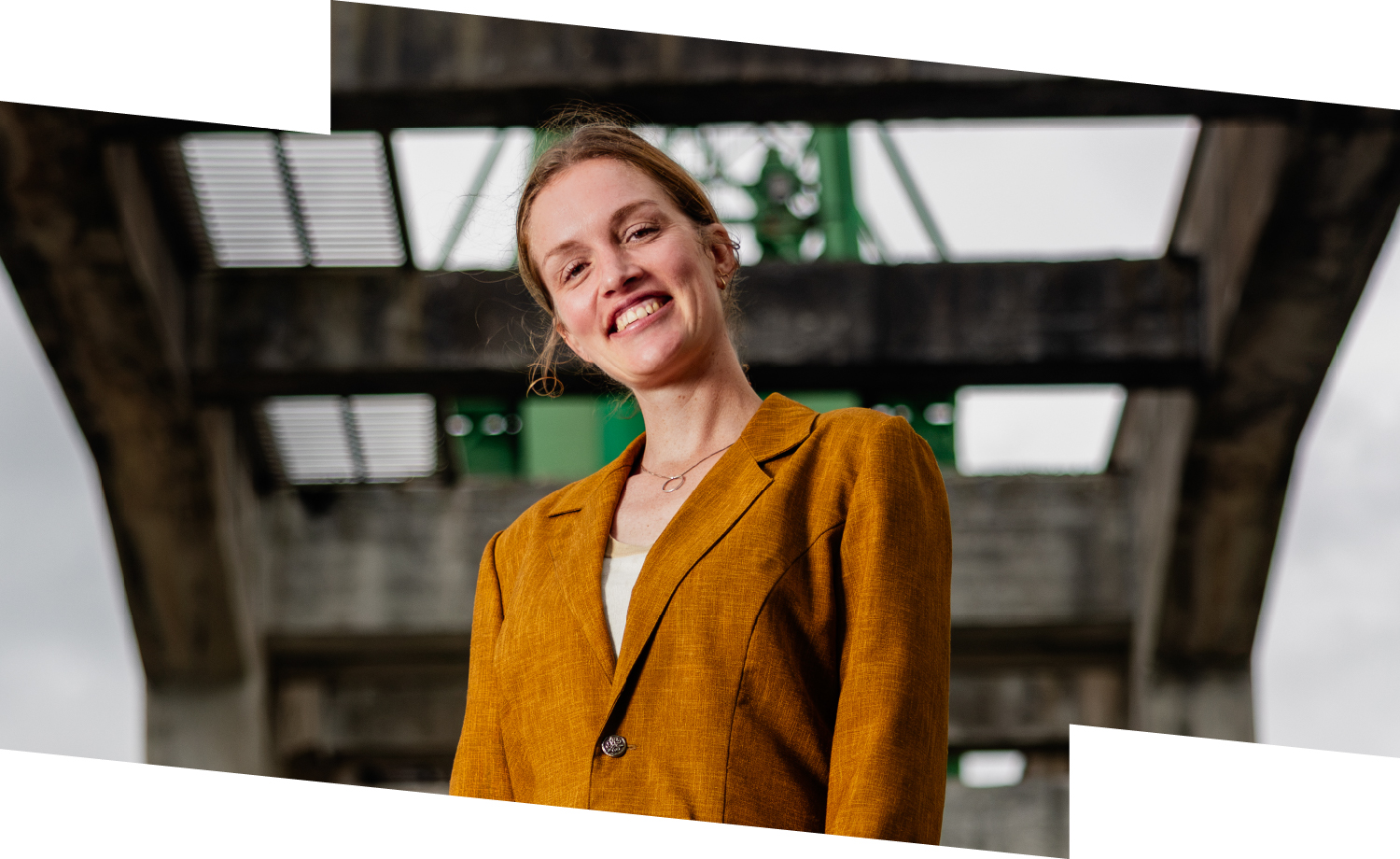
Iona Mulder, founder of The Good Spice
What’s your favourite spice and why?
“Gosh… it feels just like having to choose which of my children is my favourite. Right now, I’m in a Cassia cinnamon phase. You see, there are two different types of cinnamon: Ceylon and Cassia. Ceylon is the cinnamon that made its way over to us during the Dutch occupation of Sri Lanka. This variety is also known as ‘true cinnamon’, but that’s actually just a marketing ploy. People see Ceylon cinnamon as being better, but it’s simply a different variety. Ceylon is a bit milder, sweeter and fresher, whilst Cassia is a bit stronger and great in curries. You can use it in pieces in a stir-fry, for example, and it immediately adds something special.”
What problem are you solving (which SDG)?
“We started over six years ago for two reasons: to improve the quality of spices and to ensure a fair trade supply chain.
The quality of spices is often poor; they lack flavour. It usually takes two or three years from the moment of harvest before a spice ends up on your plate. There can be as many as eight intermediaries involved, each with their own stock and keen to make a profit. A huge amount of flavour is lost throughout that whole process. If you’re in the region where the spice comes from, you can taste that it has much more flavour! So there’s definitely room for improvement.
The second reason came about when I was volunteering at a coffee trader’s. We’re becoming increasingly aware of the problems in the chocolate and coffee trade, but there are similar issues with spices. Nature and farmers are being exploited, and there’s a long history that also plays a part. I’ve delved into that, and I really want to do things completely differently. We work with small-scale farmers, have direct contact with them, and don’t put any pressure on them to speed up the production process. Because, of course, that too comes at the expense of nature and the flavour of the product.”
How quickly should you actually eat a spice?
“The sooner, the better. Ground spices within two years and whole spices within three years.”
Your spices aren’t the cheapest. How do you convince consumers to buy your product?
“In our marketing, the focus is on flavour, because that’s what wins people over. Most people buy our spices precisely because they taste better.
The group that wants to buy them because they’re better for farmers and the environment is much smaller. We also face a major challenge in that regard: our spices aren’t certified, even though virtually all our products are fully organic and Fairtrade, and are often even grown using regenerative farming methods. And to be stocked in shops such as Ekoplaza, you need to be certified – for example, organic, Fairtrade or Rainforest Alliance.
Because we work with small-scale farmers, certification isn’t feasible. It costs between 15,000 and 60,000 euros, which is far too expensive for most of the farmers we work with.
That’s why we have to win consumers’ trust differently. One way we do this is by telling the farmers’ stories themselves. We’ve visited almost all the places where our spices come from in person. And that’s not just a quick visit, but a period during which we also get involved in the work and can experience first-hand how things are done there. We also carry out extensive laboratory tests for food safety, so we can see exactly whether any pesticides have indeed been used.”
You sell spices, but at the same time you’re trying to transform an entire supply chain. When did you realise this was about much more than just selling a great product?
“That was part of the mission from the very start. I already knew back then how the trade works. Strangely enough, the colonial mindset is still ingrained in many people. They want a product at a price they themselves set, thereby putting farmers under pressure. At the same time, we’re setting up development partnerships in that very same country. To me, that feels very contradictory. Why don’t we just pay a normal price for the product, and why don’t we treat small-scale farmers as we do in the Netherlands?”
The text continues below the image.
The Good Spice is structured as a ‘steward-owned’ company. What does that mean?
“The Dutch East India Company (VOC) pioneered the shareholding system. This ensures the focus is on making a quick profit for shareholders, which is actually the opposite of what we want. That’s why The Good Spice has been 95 per cent steward-owned since 2023, when we became a private limited company. We prefer to think about the long term and demonstrate that you can still build a healthy business that way. Pursuing our mission and making money go hand in hand.
The shares are structured in accordance with the ‘golden share’ model. This means that you cannot change the company’s structure, as this would require 100 per cent of the voting rights. One share – the golden share – goes to a foundation that safeguards the company’s mission. This share has not yet been issued, which is why we cannot yet claim 100 per cent steward ownership. We are likely to issue the golden share next year or when we take on external shareholders.”
Het interview gaat verder onder het blok over steward ownership.
About steward-ownership
Steward ownership is a form of enterprise in which control and economic ownership are separated, enabling a company to focus fully on its purpose.
The principles of steward ownership:
- Self-management
Control lies with stewards: people who are connected to the company and its mission. Control cannot be sold. - Profit serves the mission
Profit is a means to an end, not an end in itself. Profit serves the mission and development of the company and is reinvested or donated in line with the mission.
How is The Good Spice funded?
“We received funding from the DOEN Foundation in 2024 and from the Rabo Foundation in 2025. And on September 1st, we were told that we’re receiving a new investment from both the DOEN Foundation and the Rabo Foundation! We’re very pleased about that.”
And what are you going to do with the money?
“Over the past few years, we’ve learnt that our strength lies in selling spices online. That’s why we want to invest fully in expanding the online shop.
We’re also working with high-end restaurants, but margins are under a lot of pressure and, of course, we’re not the cheapest. On top of that, chefs want their orders delivered within one working day. I worked as a chef myself for two years, so I know how it works, and I understand it. That’s why we’re currently focusing more on home cooks.”
We can already picture it perfectly: a collaboration between The Good Spice and Ottolenghi, the man behind the sumac and za’atar trends. What do you think?
“Absolutely! I regularly cook recipes from his books myself, and I also think that, thanks to Ottolenghi, many Dutch people have started cooking with spices more often. That creates a bigger market for us. So, in a sense, we can say that his influence has contributed to the success of The Good Spice.
I am, however, a bit disappointed with the quality of the spices he sells. So I’d very much like to start a collaboration.”
Which spices do you currently see as being under the most pressure from climate change?
“To be perfectly honest? Almost all of them.
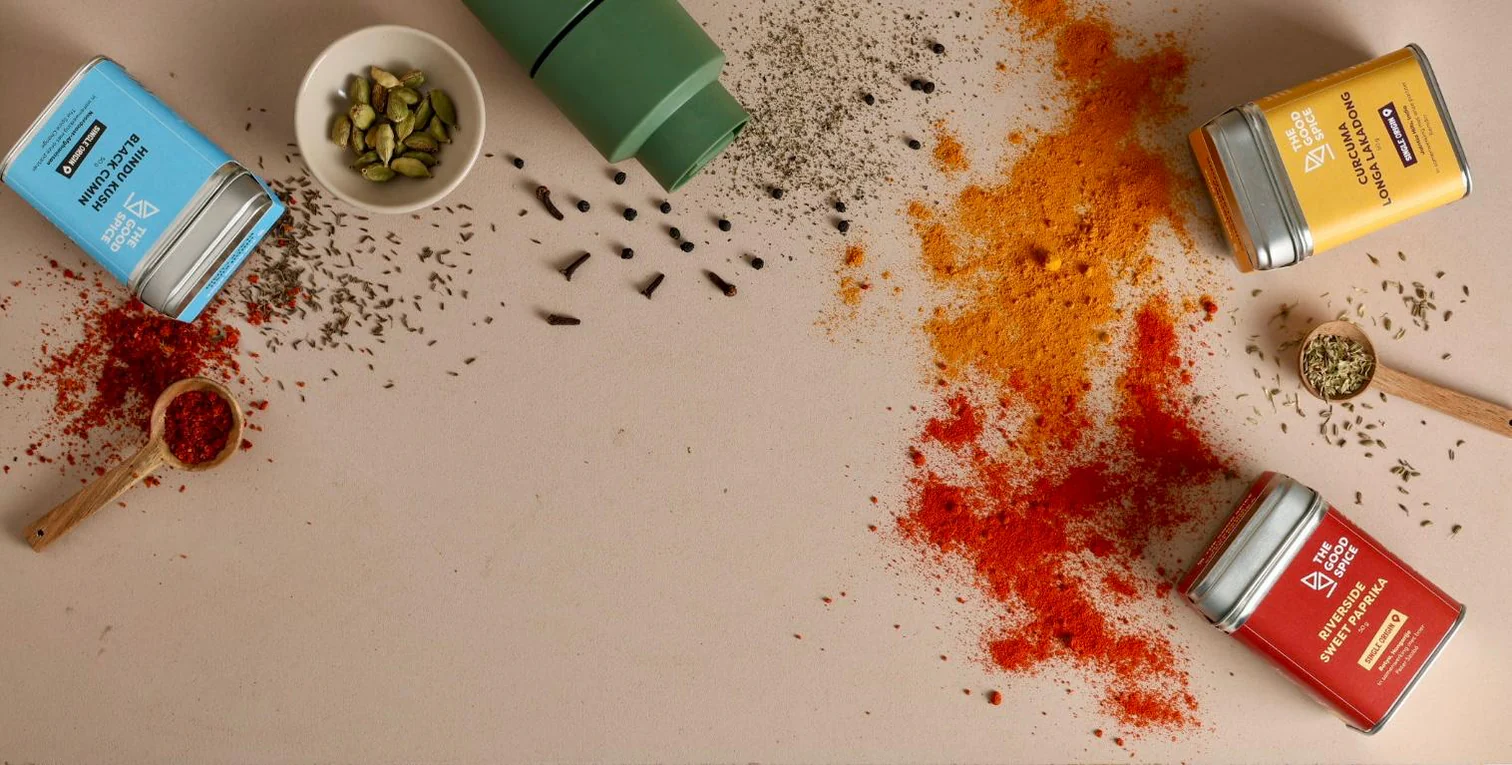
Take paprika, for example: it comes from Hungary. It’s a different variety of pepper to the ones you find here in Dutch supermarkets. They’re much smaller. The harvest is under pressure. It’s really very hot in Hungary – sometimes as high as 45 degrees Celsius – and that damages the peppers. But it goes much further than that, because if the drought continues like this, it won’t be possible to grow any peppers at all in that country soon.”

You’ve recently moved from SoZa to the Caballero Fabriek. How are you getting on at the new location?
“It’s very different. We’re used to having carpet tiles, and now we have a really lovely floor. We’ve only been here for a month, so I can’t say much more about it yet, but it really is a lovely place.”
Think back to your first year as an entrepreneur. If you could give yourself one piece of advice in hindsight, what would it be?
“Make sure you get a brilliant accountant and co-founder straight away!”
What does your business mean for the city of The Hague?
“There are lots of great things happening here. KiCo is a really good fit for us; I’ve known them for quite a while through the impact scene in Amsterdam. And secretly, I’d love to be based at The New Farm, because there are lots of food entrepreneurs there. But in terms of the location’s accessibility, it’s less convenient for us. And The Hague’s impact network is great.”
Want to know more?