In the Founder’s Seat: Key2XS
An interview with Vincent Philipsen
Key2XS develops technology that enables organisations to apply the same identity governance they use for digital access to physical access to critical infrastructure. Identity governance refers to the policies, approvals and controls surrounding access rights. Whilst organisations can centrally grant and revoke digital access rights, physical keys and access to premises are often still managed via separate systems.
Key2XS brings these worlds together, enabling, for example, energy companies, telecoms firms and other organisations with critical infrastructure to use a single identity and access policy to determine who has access to both digital systems and physical locations. The company was founded by Vincent Philipsen, Reinier van der Drift, Sjoerd Schelvis and Niels Bakker. We spoke to Vincent Philipsen, founder and CCO, about physical and digital security and the development of Key2XS.

Today in the Founder’s Seat:
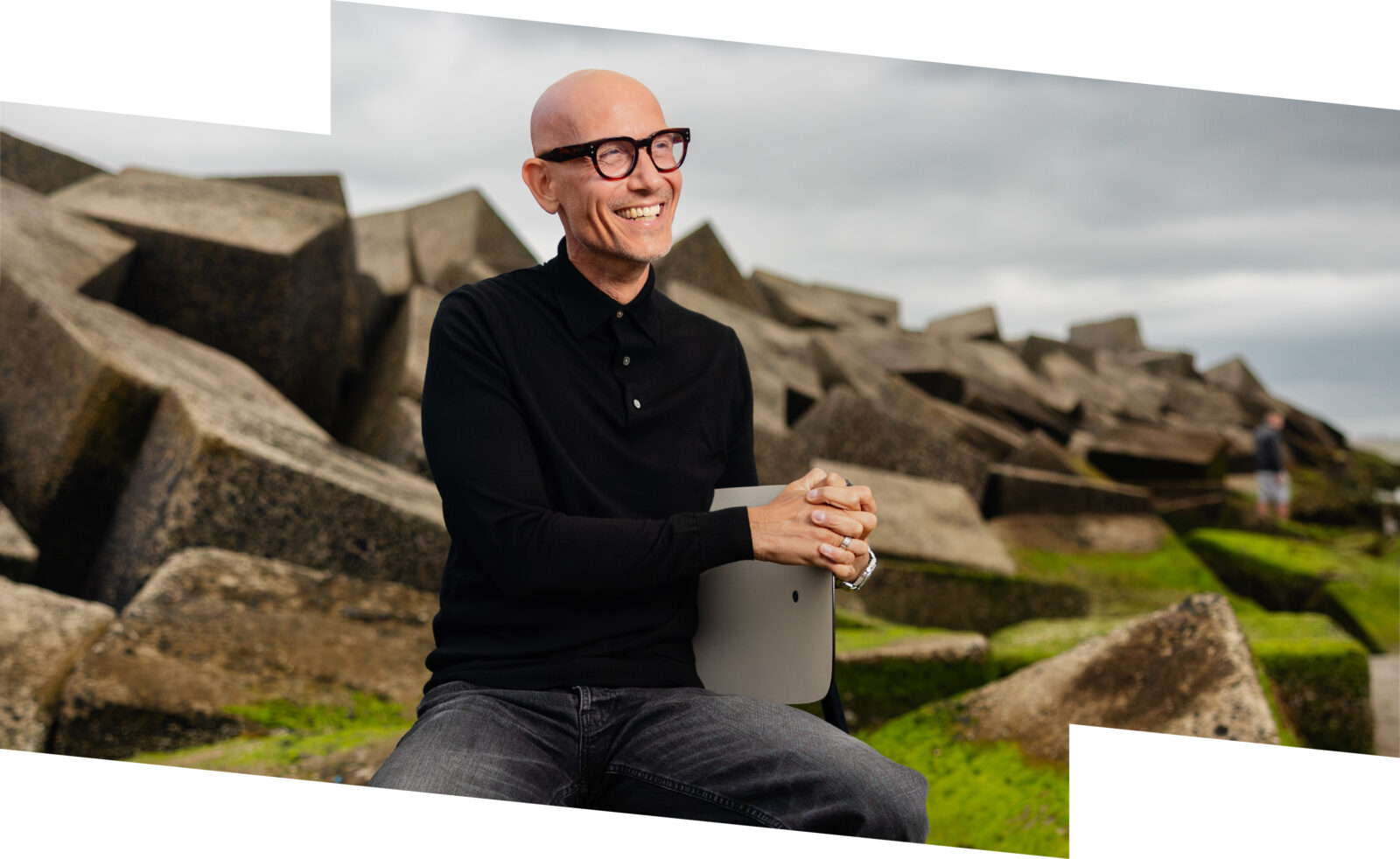
Vincent Philipsen, founder of Key2XS
You link digital identity to physical access. How exactly does that work?
“In the digital world, we’re used to having to prove who you are before you’re granted access to something. For example, when you log in to your work computer or use online banking. The reasons why you’ve been granted access are also recorded, and those rights can be revoked.
In the physical world, things often work differently. If you have a key, you can enter a building. Sometimes this can cause problems, for example, if you’re no longer authorised to use that key or if you give it to someone else who shouldn’t have access. In the case of critical infrastructure, such as a transformer station or a telecoms site, this can pose a major risk.
We are therefore applying the controls we are familiar with in the digital world to physical access. For example, there are smart keys to which personal access rights are linked. This allows you to determine who is permitted to enter where, and you can also revoke those rights when the situation requires it. With identification via an app, you can verify whether the person holding the key is actually the right person.”
Why haven’t those digital and physical access rights been linked yet?
“Within organisations, these are often still two separate worlds. The IT side is very mature when it comes to identity, access rights, security policy and legislation. But the issuing of physical keys often falls to facilities management. These are completely different departments that are not always well connected with one another.
Yet the question is essentially the same: who are you, where are you authorised to go, and why? We bring those two worlds together.”
What exactly does Key2XS do itself in this regard, and what does it not do?
“We do not manufacture the keys and cylinders ourselves. There are specialist suppliers for that. On the other hand, organisations use identity and access governance systems, which determine who is permitted access, why, and for how long.
Key2XS bridges the gap between these two worlds. The software they have developed translates governance decisions from the identity environment into physical access rights and ensures that changes are also implemented for physical access.
When someone joins the organisation, changes roles or leaves, their access rights change too. We ensure that this happens not only digitally, but also in terms of physical access. To this end, our system interfaces with an organisation’s existing systems and with various suppliers of keys and locks.
We do this for organisations in the energy, transport and water sectors, as well as for public authorities, amongst others.”
What does your business mean to The Hague?
“The Hague is a city of peace and justice, but also of safety. That suits us very well. We’re all from the neighbourhood ourselves, and we have close ties with the local council.”
There are four of you co-founders. How does that dynamic work?
“We’re quite a mixed bunch. Reinier is 70, two of us are in our early 30s, and I’m 53, and we really can’t do without one another. We’re all entrepreneurs and complement each other well in the way we think and act.”
Your company is based at the HSD Campus. What practical benefits does that bring you?
“It works incredibly well. We make use of all the services, chat to other tenants and attend virtually all the events. It really is a melting pot where people come together and where new connections are easily formed. We’ve also worked closely with InnovationQuarter, which gives us a great deal of validation. Ultimately, of course, we’d rather make our money from commercial clients.”
What do you still feel is missing, and how could the business environment be improved?
“In the Netherlands, there is relatively little funding available for start-ups to really scale up. Fortunately, things are going very well for us, and we’ve found investors, but overall there’s room for improvement.
What we’re also missing is a touch of chauvinism. That applies to the Netherlands, but actually to Europe as well. In America, it’s much stronger. For example, when army vehicles or city buses need to be purchased here, they come from China. Yet we manufacture electric city buses right here in Eindhoven, and such a company then struggles to stay afloat. I think tendering processes have sometimes gone too far in this respect. They’ve become so process-driven that they’re missing the point. In my view, we should focus much more on what we have here ourselves and how we can use that to strengthen the local economy as well.”
What impact do you want to make with Key2XS?
“We are extremely focused on security. Essentially, we want to ensure that everything that is normal today remains normal. That clean water comes out of the tap, that the energy supply continues to function, and that our infrastructure is secure. If anything goes wrong there, the impact is enormous. Think of drinking water becoming contaminated or power cuts. That is why critical infrastructure must remain inaccessible to people who have no business being there. Ultimately, the greatest risk in this regard is often people themselves, and those people gain access with a key. That is precisely where we are trying to introduce greater control and security.”
The interview continues below the image.
You’re keen to understand how things work. Is that an advantage or a disadvantage as an entrepreneur?
“I actually see that as a real advantage, because it means I can talk to anyone. I find it just as easy to talk to someone working in sales, finance or law as I do to a technical person. I’m no expert in any of those fields, but I do want to understand what someone is talking about. Because if I don’t understand their language, I won’t know where to invest either. So for me, wanting to understand how something works is a real advantage.”
What’s your top tip for other entrepreneurs?
“Validate your product-market fit. You might come up with something in your own little world that you think is brilliant, but ultimately there has to be a need for it. An artist can create something because they find it beautiful, regardless of what anyone else thinks of it. But if you want to do business, you also need to think like a marketer: what is the need, and what can I build to meet it?”

Want to know more?