In the Founder’s Seat: Dianne van Essen
An interview with The Great Plastic Bake Off
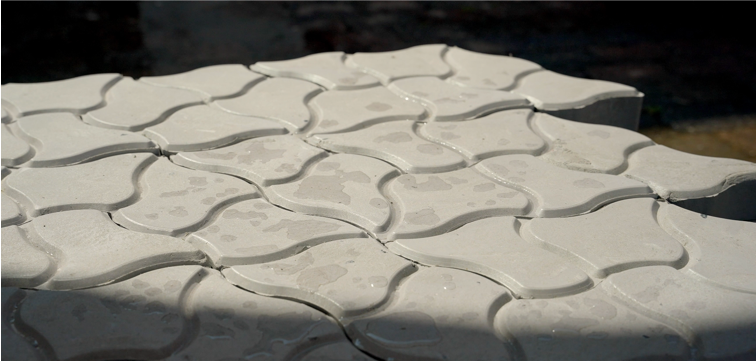
The Great Plastic Bake Off develops local solutions for plastic waste that is difficult to recycle. Using mobile factories, known as FUSE Kitchens, they process various types of plastic on site into ‘Ekoduro’: a strong and sustainable material used to make building materials and furniture, amongst other things. This means that waste does not have to be sent to landfill, incinerated or transported over long distances, whilst at the same time creating a local cycle from waste to new products.
The Great Plastic Bake Off is now working on projects in various locations around the world. We speak to co-founder Dianne van Essen about plastic as a raw material, local production and how a technical solution can also create economic and social impact.
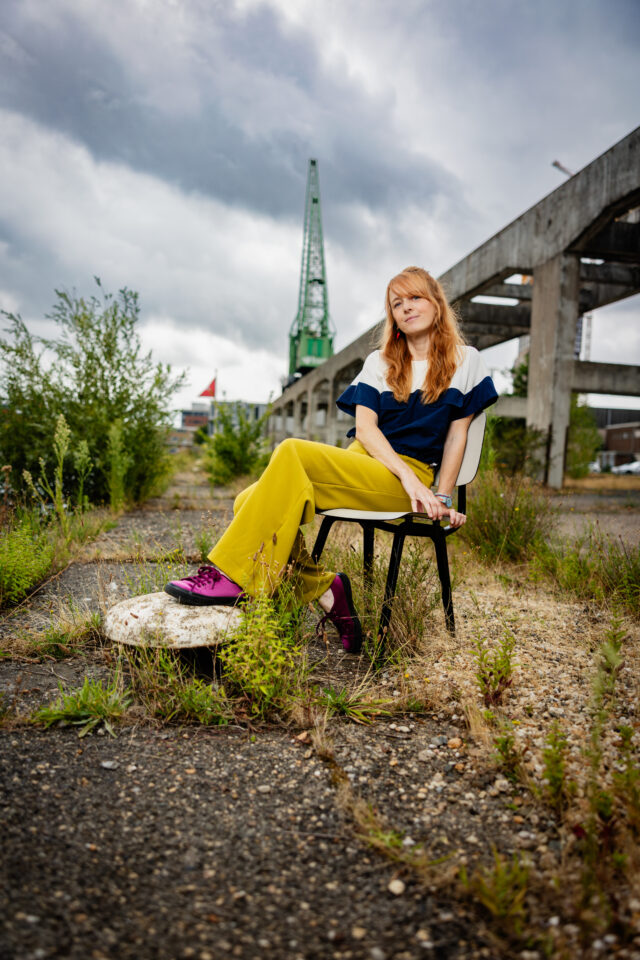
Today in the Founder’s Seat:
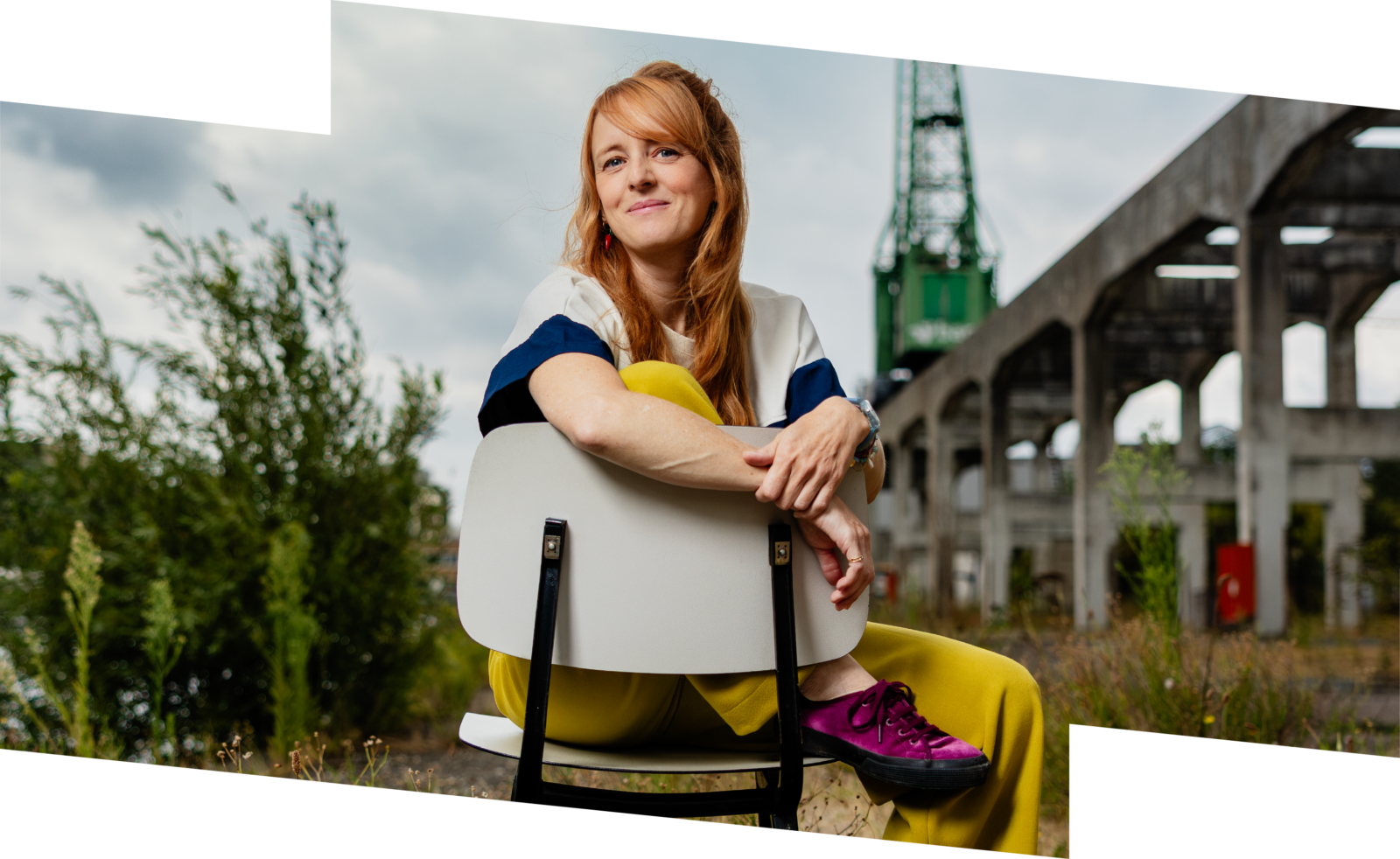
Dianne van Essen, co-founder of The Great Plastic Bake Off
What problem are you solving?
“We produce building materials from plastic waste that nobody has any use for, mainly in places where the necessary infrastructure is not yet in place. This is a problem in many parts of the world. We provide the technology to melt down plastic waste into strong building materials, such as planks or tiles, and assess what is needed on a location-by-location basis.
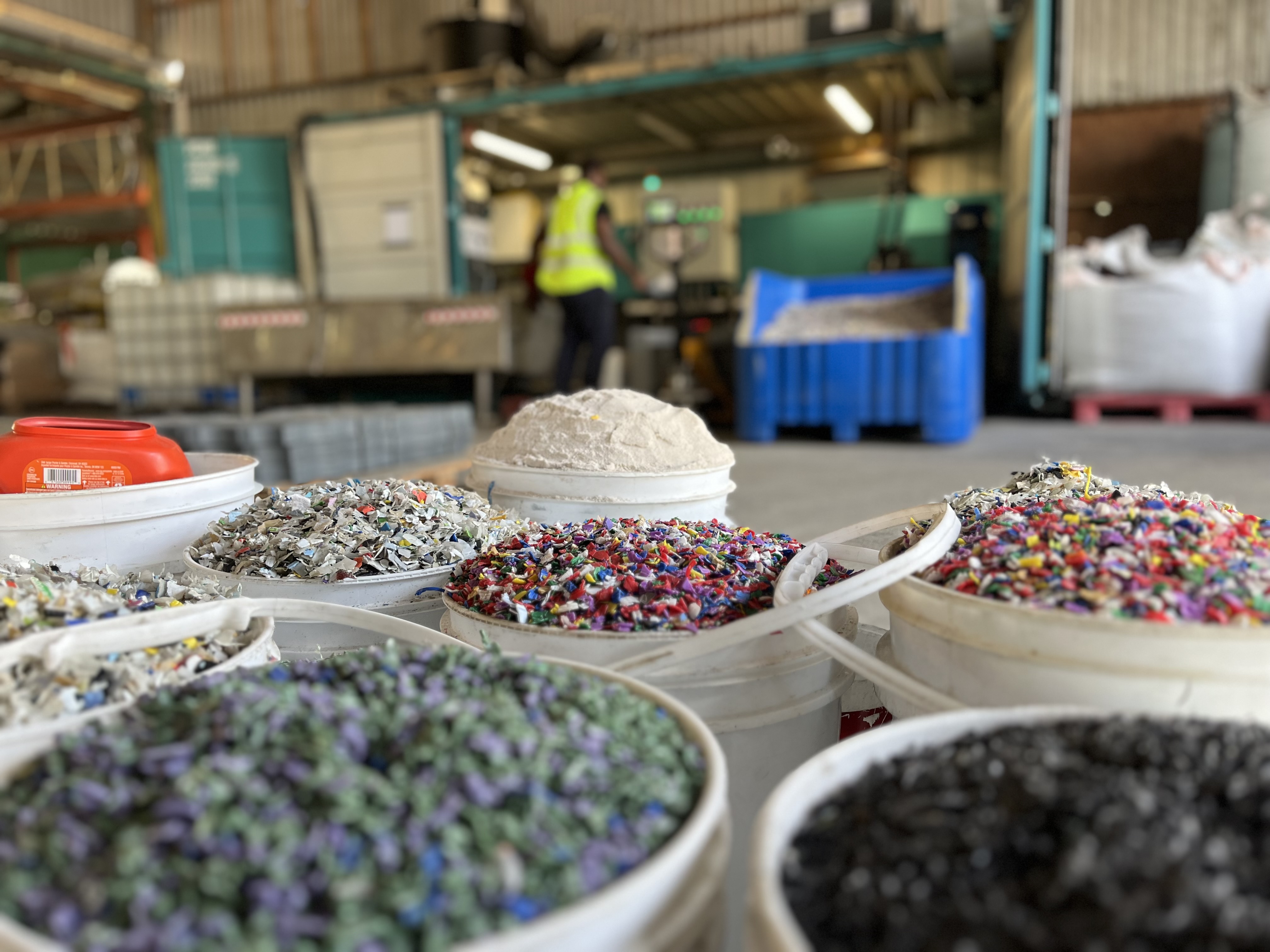
We use contaminated plastic, which would otherwise end up in landfill or in the sea or rivers. It often contains all sorts of things, such as sand, algae or food scraps. Most machines break down when they have to process this contaminated plastic, but our technology can process plastic without cleaning it first. This means we can process waste such as shampoo bottles, crates, bags and cling film that would normally end up in landfill because they cannot be processed.
We don’t use PET bottles, however, as there are often return schemes in place to recycle them. And even if there isn’t a local scheme, you can send them abroad and get money for them. The caps, incidentally, are made of a different type of plastic; nobody usually wants them, so we can put them to good use.”
So: plastic waste in, building materials out. Surely it can’t be that simple, can it?
“You could compare it to baking a cake. We’ve invested in putting together recipes that are developed in our ‘kitchen’. For example, the recipes contain a specific quantity of various types of plastic and sand. If you mix all that together in a certain way, you end up with a good ‘dough’. We put that through the machine to ‘bake’ it into building materials.
But you can’t just melt everything down. If you heat PVC pipes, for example, they release toxic substances.”
Do you have to sort the plastic first?
“We’d certainly like to. There are seven types of plastic, and we only use a few of them. So yes, we’d like to know.
Here’s an example: in Barbados, we set up a kitchen at a recycling centre. It receives waste from across the whole island and employs people to sort it by hand. It’s a source of income for them. It doesn’t matter to us how the waste is sorted, as long as we can use it afterwards. They were already sorting it well and were looking for a way to dispose of the waste. Remelting plastic into usable products proved to be a good solution for them and provides them with a new revenue stream.
We’re keen to partner with existing recyclers and offer them our technology so they can then melt down their waste into a product that can be sold. We help them bring the product to market, or they do it themselves. We consider every step in the chain.”
What does one of these FUSE Kitchens look like, where you melt down the plastic?
“We’ve chosen to keep it compact. The entire FUSE Kitchen is built into a shipping container. It’s very easy to set up; you don’t need to build a whole factory on site. All you really have to do is open the container doors, plug it in, and it’s up and running.
We often work with people who haven’t had any formal training or haven’t had opportunities. We try to get these people working with the machines in an accessible way and also help them take the next step through education and training. Once they can operate the machine, they can call themselves ‘operators’. So we’re not just clearing up plastic to keep it out of the environment; we’re also creating jobs and raising awareness that people can manage plastic differently.”
Does a recycler, for example the one in Barbados, buy the machine from you, or is it hired? How does that work?
“Whereas in the past we invested alongside partners through joint ventures and experimented with leasing arrangements, the focus today is on sales. Customers purchase the technological solution and enter into a long-term licence and maintenance contract. This shifts ownership to the local business owner, whilst we continue to provide expertise and technology. The result is a scalable model that enables us to serve new markets worldwide ever more quickly with a compact team.”
The text continues below the image.
Are islands of particular interest to you?
“Yes, that’s right. There’s often no space or capacity to build anything on a large scale. We’ve done a lot of research and found that containerised solutions are widely used in places like this.”
Never heard of ‘containerised’ before. Learnt something new again!
“We’re a startup on the way to becoming a scale-up, and we’re learning every day too. The containerised concept is one of the things we now know works well. We’ve even patented it: the fact that we’ve managed to fit all of this into a single container.
And it helps that we’re doing all this from the Netherlands. Here, we have access to grants, support programmes such as ImpactCity, a strong network and intellectual resources thanks to the many universities. In many places, they don’t have any of that. Investing here and focusing our efforts where they’re needed – that’s the idea.”
How big is your team?
“We work with several permanent colleagues in the Netherlands on business development, product development, technical innovation and project management. In the countries themselves, we work with project partners on implementation and operations. And where necessary, we bring in specialist expertise; we have now managed to build up a strong network of experts around us.”
To us, you are a wonderful example of how to combine ‘doing good and doing business’. How do you maintain that balance?
“We have a wonderful mission, but nothing happens by itself. A key aspect of our business is that we have to look very carefully at who we work with. Wanting to do something good isn’t always the right motivation for entering into a partnership. What is the other party’s intrinsic motivation? Does it align with ours, and does it also fit with a healthy business? Because simply investing and wanting to help people doesn’t ultimately yield much. You need to establish clear agreements regarding responsibilities throughout the supply chain. It remains a challenge, but fortunately we know what we’re doing it for.”
The text continues below the image.
Is an investor involved?
“We have shareholders who helped us get started and explore the technology in the early days. Two more shareholders have since joined us – people from our own network – and we now have an investor in Curaçao for the Caribbean region.
We are also working on projects funded by grants. For example, on Dominica, an island in the Caribbean, we are involved in a project to tackle the waste problem. The landfill there is full and causing a great deal of disruption. At the same time, we are working on a potential new project in Jamaica. A local partner there is applying for a grant, and we have been brought in to provide advice and the necessary technology. For us, that is the ideal way to collaborate: we share our knowledge and supply the technology, so that local parties can ultimately carry on independently.
A large part of our work involves networking and connecting the right people. We are exploring opportunities in South Africa and are also collaborating with the EU.”
What an international job. How often are you here in The Hague?
“We lived in Curaçao for three years. They didn’t yet have any large-scale processing facilities, so we set that up there. And from that location, we also established operations in Suriname and Barbados. There are many interesting islands in that region, but that will take a bit more time.
We’ve been back in The Hague since the summer of 2025, and I’ve noticed that the network here is much more internationally oriented. We can make a greater impact from here than we could from Curaçao. Especially as we don’t just serve the Caribbean, but want to expand worldwide.”
How do you like the startup hub Apollo 14, where your office is located?
“Yes, well. It’s good that the work around Apollo 14 is now almost complete. The area is becoming more and more attractive.”
In your opinion, what opportunity should The Hague seize when it comes to your approach to waste management?
“We need to start thinking much more in terms of recycling as a fundamental principle. Initiatives such as Droppie play an important role in this. They make it easy and appealing to hand in waste. At the same time, the regulations must also change if we are to make real progress. In the meantime, our knowledge and technology are needed much more urgently in other parts of the world.”
Want to know more?